Compound Guide
Selank: what it is, and what the research actually shows
A plain, cited explanation of Selank: its origin as a synthetic tuftsin analogue, what research has studied it for, and where it stands under UK law. Research use only. Nothing here is instruction for human use.
What Selank is
Selank is a synthetic heptapeptide developed in Russia, structurally based on tuftsin, a naturally occurring immunomodulatory peptide fragment of an antibody molecule. Researchers modified the tuftsin sequence to improve its stability once administered, since the natural tuftsin fragment breaks down very quickly in the body, a similar stabilisation challenge to the one that shaped tesamorelin's design from natural GHRH. Selank was originally developed and studied within Russian pharmacological research institutions, which is a distinct research lineage from most of the compounds on this site, which largely trace back to Western academic or biotech research.
Tuftsin itself, the natural peptide Selank is based on, is a fragment released from a larger antibody molecule, immunoglobulin G, and was originally studied for its own role in stimulating certain white blood cell activity. Selank's designers took that natural fragment and modified its structure specifically to resist rapid enzymatic breakdown, extending how long it remains active in the body compared to unmodified tuftsin, which degrades within minutes under normal physiological conditions. That engineering choice, extending an otherwise short-lived natural signalling fragment into something with a longer working window, is a common design pattern across several peptides discussed on this site, not something unique to Selank.
It's often discussed alongside Semax, another Russian-developed peptide with a broadly overlapping research history and origin, though the two are structurally distinct compounds studied through different, if sometimes related, biological mechanisms and pathways.
What the research has actually studied
- Anxiolytic research. The bulk of Selank's published research history concerns anxiety-related behaviour in animal models, and some Russian clinical research literature examining anxiolytic effects, distinct from the sedative mechanism of traditional anti-anxiety medications.
- Immunomodulatory effects. Given its origin as a tuftsin analogue, and tuftsin's own role in immune signalling, part of the research literature examines Selank's effects on immune-system markers in laboratory and animal-model studies specifically.
- Neurotrophic factor research. Some studies examine Selank's effect on brain-derived neurotrophic factor (BDNF) expression, a protein involved in neuronal growth and plasticity, in animal models.
- Cognitive and mood-related behaviour. A smaller strand of research looks at broader cognitive and mood-related endpoints in animal models, an area that overlaps with, but is distinct from, the anxiolytic research above.
- Enzyme-inhibition research. Some laboratory work has examined Selank's effect on specific enzymatic pathways in the brain believed to be involved in regulating mood and stress response, an area of research that connects the anxiolytic and neurotrophic strands above at a more mechanistic level.
A genuinely important caveat for this specific compound: a meaningful share of the published Selank literature originates from Russian-language research institutions and, in some cases, was published in Russian-language journals with less international peer-review infrastructure and replication than is typical for Western biomedical research. That doesn't make the findings automatically wrong, but it does mean the usual caution about replication and independent verification applies with extra weight here, and it's a distinction worth understanding rather than treating all published research as equally rigorous regardless of its source.
This isn't a criticism unique to Selank or to Russian research generally; it's a broader point about how to evaluate any scientific claim: the strength of a finding depends partly on how independently it's been replicated and how thoroughly the publishing venue reviews submissions before printing them, not just on whether a study exists at all. A single study from any country, published in any journal, is weaker evidence than the same finding replicated independently by separate research groups using different methods, and that general principle applies to every compound discussed on this site, not only to the ones with a research history outside Western institutions.
Human evidence versus animal evidence
Selank has reportedly been used in some clinical research contexts within Russia, including as an intranasal formulation studied for anxiety-related applications, which puts it in a slightly different position than compounds with purely preclinical research histories. Even so, this research has not gone through the kind of large-scale, independently replicated, internationally reviewed clinical trial process that would support a regulatory approval in the UK, US, or EU, and Selank holds no such approval in any of those jurisdictions. The honest summary: real, published research interest with some human-facing clinical research history in its country of origin, but nothing approaching the evidentiary bar of an approved medicine internationally.
It's worth understanding why "approved in one country's clinical research system" and "approved as a medicine internationally" are genuinely different claims, since the gap between them is exactly where a lot of confusion in this category originates. Regulatory approval isn't a single global event; it's a jurisdiction-specific process, and a compound can have a real research and even limited-use history in one country's system without that automatically transferring to recognition, let alone approval, in the UK's or EU's separate regulatory frameworks. The MHRA makes its own independent assessment based on data submitted to it directly, and no Selank submission of that kind has resulted in UK marketing authorisation.
Where Selank stands under UK law
Selank is not a controlled substance under the Misuse of Drugs Act 1971, so it's legal to buy, sell, and possess as a research-use-only laboratory material in the UK. Marketing or selling it for human consumption or therapeutic use is prohibited under the Human Medicines Regulations 2012, the same framing every listing on this site follows regardless of a compound's research or regulatory history elsewhere in the world, including any limited clinical use it may have in its country of origin. Full detail is on our UK legal status page.
Selank in our catalogue
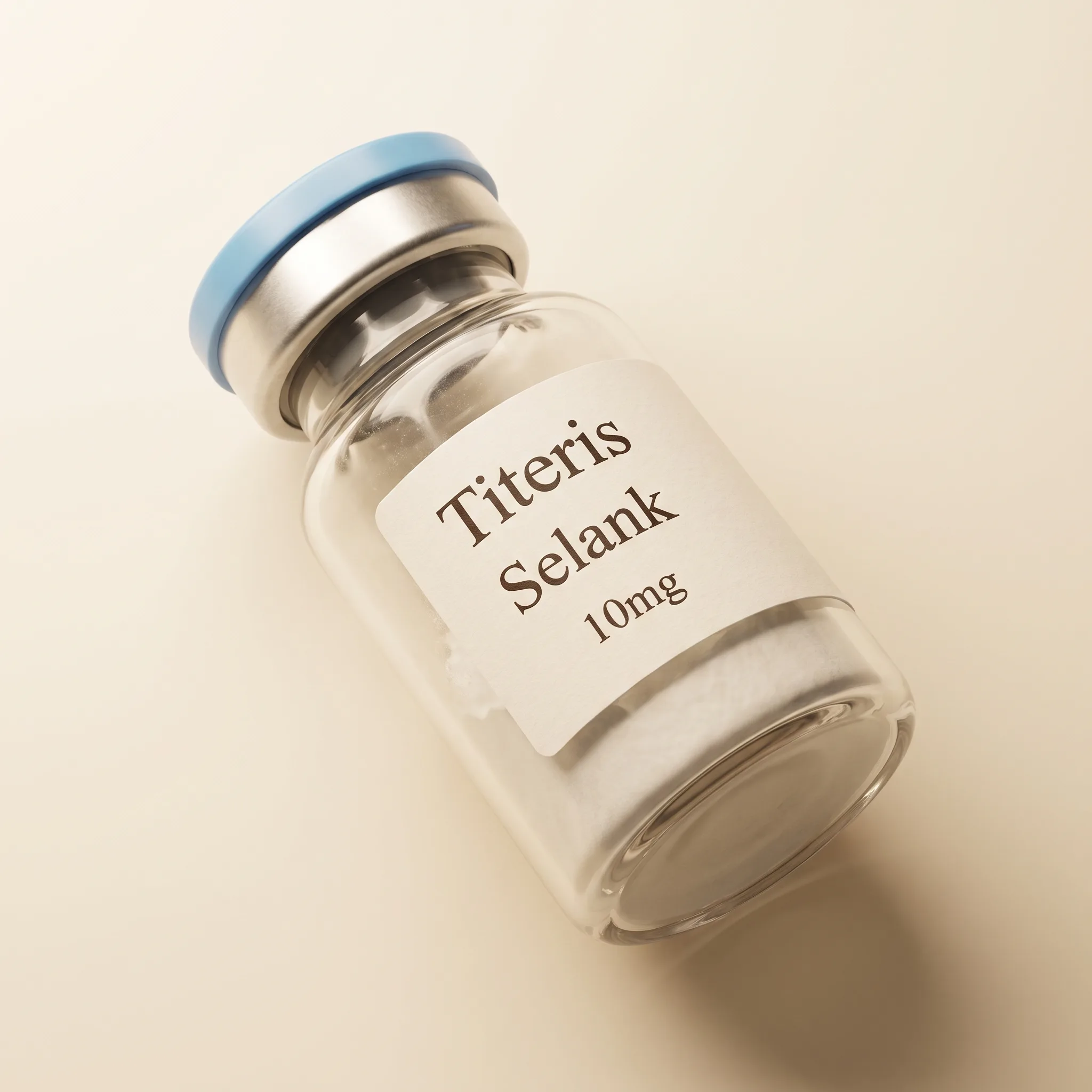 SK-10
SK-10Often discussed alongside Semax, another peptide from the same Russian research lineage and country of origin.
Frequently asked
What's the difference between Selank and Semax?
Both were developed within the same Russian research tradition but are structurally distinct compounds. Selank is a tuftsin analogue, studied mainly in anxiolytic and immunomodulatory research contexts. Semax is derived from a fragment of adrenocorticotropic hormone (ACTH) and is studied mainly in nootropic and neuroprotective research contexts. They're often discussed together because of their shared research lineage and country of origin, not because they're the same compound, act through the same mechanism, or are interchangeable in a research protocol.
Has Selank been approved as a medicine anywhere?
It has a clinical research history within Russia, but it does not hold approval from the MHRA, FDA, or EMA, and is not a licensed medicine in the UK, US, or EU, or anywhere outside its country of origin, as far as publicly available regulatory records show.
Do you test every batch?
We publish our supplier's own third-party documentation where it exists, credited to the lab, and state plainly when a batch lacks current documentation. We do not yet operate independent testing ourselves. See our documentation policy for the full, current answer.