Compound Guide
CJC-1295 + Ipamorelin: two distinct compounds, explained separately
A plain, cited explanation of CJC-1295 and Ipamorelin: two growth-hormone-pathway research compounds, why they're studied and sold together, and where they stand under UK law. Research use only. Nothing here is instruction for human use.
What CJC-1295 is
CJC-1295 is a synthetic growth hormone-releasing hormone (GHRH) analogue, engineered, like tesamorelin, to signal the pituitary gland to release the body's own growth hormone rather than supplying growth hormone directly. What distinguishes CJC-1295 within that GHRH-analogue category is a modification specifically intended to extend its duration of action well beyond that of natural GHRH or unmodified analogues, through a chemical modification that increases its binding to a blood protein called albumin, slowing its clearance from the bloodstream.
Two variants circulate in the research-chemical market under the CJC-1295 name: one with this extended-duration modification (sometimes labelled "with DAC," DAC standing for Drug Affinity Complex) and one without it (sometimes labelled "no DAC," which behaves more like a standard shorter-acting GHRH analogue). Our catalogue lists which variant a given product is; the two are not interchangeable, and confusing them means misunderstanding how long a given batch is expected to remain active.
The albumin-binding modification behind the DAC variant is worth understanding on its own terms. Albumin is the most abundant protein in blood plasma, and molecules that bind to it tend to circulate for much longer before being cleared by the kidneys and liver, since the albumin-bound complex is too large to be filtered out quickly. Attaching a small chemical tag designed to bind albumin is a recognised pharmacological strategy used across several drug classes, not something unique to CJC-1295, and it's the same general principle, extending a molecule's working window by slowing its clearance, that shows up in different specific forms across several peptides discussed on this site.
What Ipamorelin is
Ipamorelin is a synthetic pentapeptide, a chain of five amino acids, that acts as a growth-hormone secretagogue, meaning it stimulates growth hormone release, but through a structurally different route than a GHRH analogue. Rather than acting on the GHRH receptor pathway, Ipamorelin acts on the ghrelin receptor, the same receptor pathway targeted by the body's own hunger-related hormone ghrelin. Research interest in Ipamorelin specifically, relative to older secretagogues in the same broad category, centres on it being studied as more selective for growth hormone release with comparatively less effect on cortisol and other hormones that older secretagogues were found to influence more broadly in preclinical models.
Why these two are studied and sold together
CJC-1295 and Ipamorelin act on two different receptor pathways that both converge on the same downstream outcome, growth hormone release, which is the research logic behind studying and combining them: a GHRH-pathway compound and a ghrelin-pathway compound working through genuinely separate mechanisms, rather than two compounds doing the same thing twice. That mechanistic complementarity is a real, published rationale in the growth-hormone-secretagogue research literature, distinct from a marketing-driven bundling of unrelated products.
As with our BPC-157 + TB-500 blend, it's worth being precise about what that rationale does and doesn't establish. The complementary-pathway theory is grounded in real, separate research into each compound's mechanism. It is not the same as a controlled human trial demonstrating the specific combination outperforms either compound alone, which does not exist for this pairing any more than it exists for BPC-157 and TB-500 together, and shouldn't be assumed just because the underlying mechanistic logic sounds reasonable on paper.
How this fits alongside other growth-hormone-pathway compounds
This combination sits within a broader family of research peptides studied for their effects on the growth hormone / IGF-1 axis, which also includes tesamorelin, discussed on its own page on this site. The distinguishing feature of Ipamorelin specifically, relative to older ghrelin-receptor secretagogues studied in earlier research (including compounds like GHRP-2 and GHRP-6), is the selectivity researchers have reported for it: earlier secretagogues in this class were found in preclinical research to meaningfully raise cortisol and prolactin alongside growth hormone, while Ipamorelin has been studied as producing a cleaner growth-hormone-specific signal with less effect on those other hormones in the same models. That selectivity finding is one of the main reasons Ipamorelin, rather than an older secretagogue, is the one most commonly paired with a GHRH analogue like CJC-1295 in current research-chemical catalogues.
It's worth being precise about the evidentiary weight of that selectivity claim, in the same spirit as the rest of this site's content. The comparative preclinical data describing Ipamorelin as more selective than older secretagogues comes primarily from animal and in vitro research, not from head-to-head controlled human trials comparing the compounds directly. It's a real, published, biologically plausible finding, and it's also not the same standard of evidence as a large clinical trial, a distinction worth carrying into how much weight you place on any specific claim about this class of compounds.
None of the compounds in this growth-hormone-secretagogue family, CJC-1295, Ipamorelin, tesamorelin, or the older GHRPs mentioned above, have been through the kind of controlled human trial process for a general research-use indication that would let anyone make a confident comparative efficacy claim between them. What exists is preclinical mechanistic research describing plausible reasons why one might behave differently from another, which is genuinely useful for understanding the category, but is a different thing entirely from a demonstrated, ranked comparison of real-world outcomes in humans.
UK legal status
Neither CJC-1295 nor Ipamorelin is controlled under the Misuse of Drugs Act 1971, so both are legal to buy, sell, and possess as research-use-only laboratory materials in the UK, individually or combined. Marketing or selling either for human consumption or therapeutic use is prohibited under the Human Medicines Regulations 2012, the same framing every listing on this site follows. Full detail is on our UK legal status page.
In our catalogue
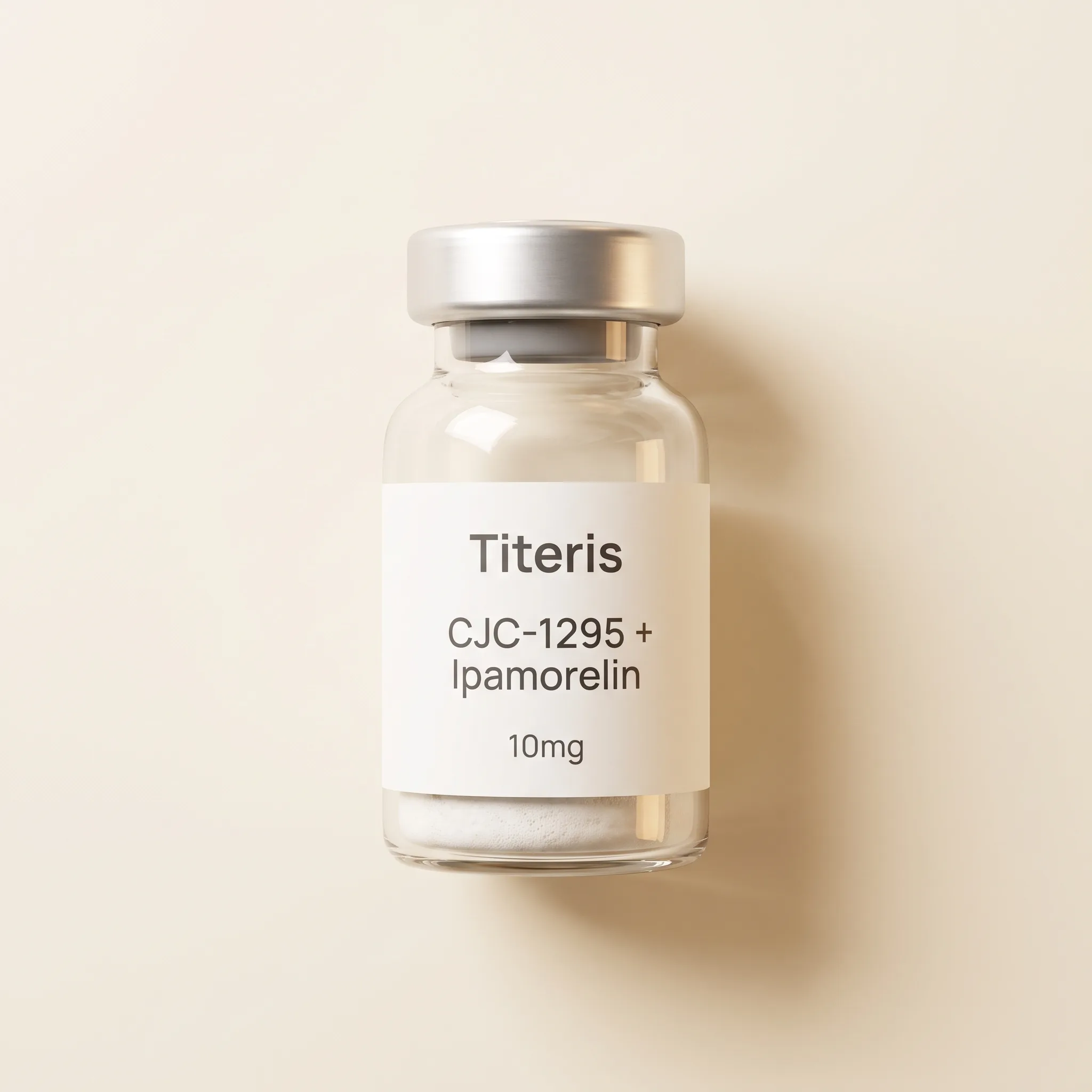 CP-10
CP-10CJC-1295 + Ipamorelin, 10mg blend
Combined research compound blend, supplied for laboratory research use.
£44.99 Contact us to orderCP-20CJC-1295 + Ipamorelin, 20mg blend
Combined research compound blend, supplied for laboratory research use.
£74.99 Contact us to orderFrequently asked
Is CJC-1295 the same as Ipamorelin?
No. They're structurally distinct compounds acting on different receptor pathways. CJC-1295 is a GHRH analogue; Ipamorelin is a ghrelin-receptor-acting secretagogue. They're combined because their mechanisms are considered complementary, not because they're the same compound.
What's the difference between CJC-1295 "with DAC" and "no DAC"?
DAC (Drug Affinity Complex) is a modification that extends CJC-1295's duration of action by increasing its binding to albumin in the blood. "With DAC" is the extended-duration variant; "no DAC" behaves more like a standard shorter-acting GHRH analogue. They are not interchangeable, and our listings state which variant is which.
Has the combination been tested in humans?
Not in a controlled human trial testing the specific combination against either compound alone. The rationale for combining them comes from separate research into each compound's individual mechanism.
Do you test every batch?
We publish our supplier's own third-party documentation where it exists, credited to the lab, and state plainly when a batch lacks current documentation. See our documentation policy for the full, current answer.